
The new tax regime has also been fuelling sale of SUVs, particularly the compact SUVs

'While we have done a few thousand kilometres in India, most of the testing and data collection and analysis has been done in the US, Japan and Europe.'

After a long delay, Thailand opened its twice-postponed Bangkok international motor show to the public as coronavirus restrictions eased, with nearly all attendees wearing masks and face shields.

Maruti Suzuki, Hyundai and Mahindra failed to register significant growth.

Lenders have become worried as some dealers were not using the money provided to them for car financing.

This is the first decline since June this year when car sales declined by 11%.
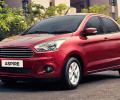
The revised prices enhances the accessibility of these outstanding products, which offer segment-first safety features and class-leading technologies

Maruti Suzuki India (MSIL) does not anticipate growth in the small car segment because people continue to find these vehicles unaffordable, chairman R C Bhargava said on Wednesday. He said the market had clearly shifted towards the sport utility vehicle (SUV) segment and the company will go in the same direction. The domestic sales of utility vehicles jumped in India by 34.54 per cent to about 2 million units in FY23.

Tata Zica was designed by an international team resulting in a more modern look.

As per SIAM data, vehicle sales across categories, including passenger vehicles and two-wheelers and commercial vehicles stood at 18,21,490 units last month as against 23,82,436 units in August 2018, a fall of 23.55 per cent.

As the production of Micra, the first car from Nissan-Renault, starts at the plant by the end of May, Kiminobu Tokuyama, managing director and chief executive of Nissan Motor India Pvt Ltd, talks to rediff.com about the company's strategy for India, the recession and the auto sector in general.

Vehicle sales across categories registered a decline of 8.62 per cent to 20,86,358 units from 22,83,262 units in May 2018.

This is the seventh straight month of growth

The Baleno is among the top selling cars with unserviced bookings of 55,000 units.

The aim is to replace nearly 40 per cent of its existing last mile fleet of delivery vans with EVs by March 2020. o start with, the company is looking at deploying nearly 160 e-vans by the end of 2019.

Auto sector cheers RBI rate cut as 'festival gift'

Mercedes sells models ranging from A Class to Maybach, priced between Rs 28 lakh and Rs 1.67 crore.
The car, the cheapest in its category, will compete against the Maruti Suzuki Dzire, the Honda Amaze, the Hyundai Xcent and the Tata Motors Indigo CS.

Scooters, once the fastest growing sub-segment, also declined for the second consecutive month in September.

FIFA president Sepp Blatter's decision to resign amid corruption allegations at soccer's governing body is a relief for corporate sponsors who have called for more transparency at the organization, sports marketing experts said on Tuesday.

Demand for passenger vehicles has been driven by new models, especially in the SUV category with the likes of Maruti Vitara Brezza and Hyundai Creta clocking good numbers

Domestic passenger vehicle sales declined 0.84 per cent to 2,63,773 units in November from 2,66,000 units in the year-ago period. Motorcycle sales, too, declined 14.87 per cent to 8,93,538 units. Vehicle sales across categories registered a decline of 12.05 per cent to 17,92,415 units from 20,38,007 units in November 2018.

Three way split of AIADMK has slowed decision-making, prompting industry to look outside the state, says T E Narasimhan.
Supply chain constraints will keep plaguing automobile companies even though demand significantly improved resulting in a 13 per cent year-on-year (YoY) increase in sales in financial year 2021-22 (FY22). Executives at auto firms fear that the Russia-Ukraine war will further dent the sector's prospects of recovery as supply chains face more disruptions. "The visibility in the supply side is so hazy that it is difficult to give even one quarter projection. But all the parameters of demand like pending bookings and enquiries are increasing.

Poor contract workers often have little or no access to safety equipment or health benefits in factories.

Sales of diesel-powered utility vehicles have been declining in the past six months as the differential between petrol and diesel prices narrowed.

The Carens is a warning for cars such as the Tata Safari, Hyundai Alcazar, Maruti Ertiga, Toyota Innova Crista and Mahindra XUV 700, because Kia punches much harder than others in its weight category.

Ford is among several multinational automobile companies in India for whom exports now bring bigger volumes than local sales.

Sales of commercial vehicles rose 5.30 per cent to 52,481 units in January this year, SIAM said.

The company had launched the Yaris in May 2018 at a price range of Rs 8.75 lakh and Rs 14.07 lakh (ex-showroom), competing with the likes of Honda City, Hyundai Verna and Maruti Suzuki Ciaz. However, it didn't have a robust response in the market, clocking a cumulative wholesales of around 19,800 units.

General Motors India Vice President P Balendran termed the decision as a positive move for the overall economy.

The electric vehicle evolution in India's passenger vehicle market has remained frozen in time and may see limited adoption over the next decade, experts say.

Car sales are likely to grow further in November.

New Creta, petrol Vitarra Brezza.. A quick look at what went down at Auto Expo Day 2.
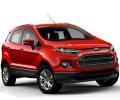
Customers have started to factor in the narrowing gap between petrol and diesel and the premium that needs to be paid for a diesel vehicle.

Auto experts from CarJasoos will answer all your questions related to buying, selling or maintenance of new or used cars.

What is driving the digital-first approach of traditional, legacy brands? Apart from the growing adoption of the internet in the country, brands are drawn to the agility of the medium.
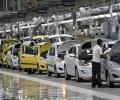
Data available from top six players - Maruti Suzuki, Hyundai, M&M, Tata Motors, Honda and Toyota - shows an average growth of about 42 per cent for the industry in June

New participants included Chinese players such as Great Wall Motors and Haima Automobile along with Olectra.

Close to 60 per cent models that Kia sells in India are top trims of the models. In line with its global strategy, the India arm of South Korean major Kia has dropped 'Motors' from its name. This is to reflect the transition from an automaker to a provider of advanced and eco-friendly mobility solutions, the company said. With a new brand identity and slogan, the fourth-largest car maker in India by sales aims to accelerate growth and strengthen its premium positioning.
